From one character to a city
The game started as a single walker on a map of letters. Here is how it grew, version by version. No dates, only numbers.
- 0.1 → 0.9 nine versions up to the first build
- 1000+ changes in the project history
- 700+ of them since 0.9, not yet released
Versions 0.1 to 0.8 are development milestones and were never released as separate builds. The first build with a number is 0.9. Everything after it is still in development.
-
Milestone
0.1 Prototype
- A map drawn in characters in a 3/4 view, with a camera and zoom
- Walkers: every service goes out and walks the roads
- A housing ladder of six steps, goods chains, storehouses and a market
- Taxes, and workers shared out by priority
- An interface of lacquer and scrolls
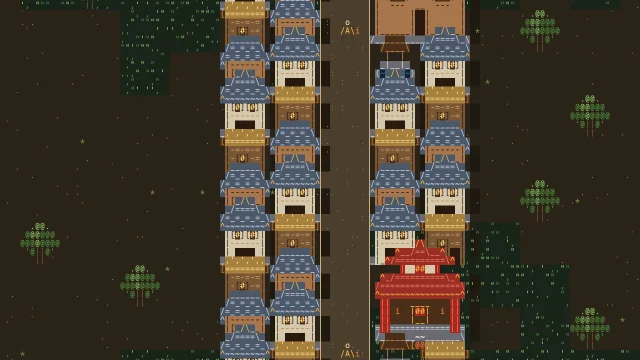
The first look of the game: letters in a 10×5 tile. It is still there as the low graphics setting. -
Milestone
0.2 Foundations
- Saves: slots, autosave and moving a game as a file
- The same map and the same actions always give the same game
- Storehouses no longer lose space when workers are short
- A city of thousands of people runs more smoothly
-
Milestone
0.3 Economy and the Xia campaign
- Mission goals, victory, and defeat by debt
- A Xia campaign of four missions with briefings
- A housing ladder modelled on the classics
- Bridges, forests and woodcutters, roadblocks for walkers
- Fires, collapses and the inspector's tower
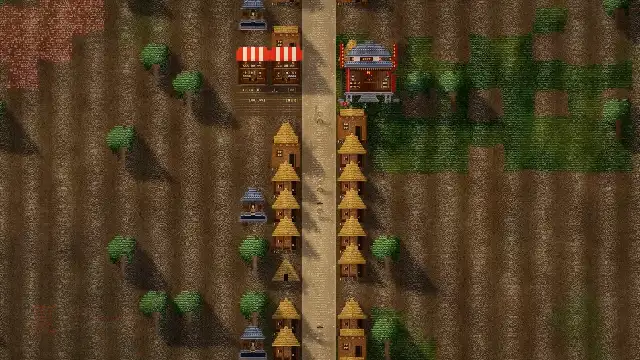
The Xia as it looks today: huts on the high road and the first dykes. -
Milestone
0.4 Interface and sound
- A main menu, a pause menu and settings
- Advisors for finances and population
- Problems shown on the map as icons, map layers on the L key
- A six-step tutorial for the first mission
- Music and sound effects
-
Milestone
0.5 A new look and living maps
- The dense style: small characters, texture, volume and light. It becomes the main look of the game
- Worlds shaped by relief and water: rivers, groves, dry beds and rocky outcrops
- Floods, droughts, plague, locusts and earthquakes, all with a warning. The dyke and the water wheel answer them
- A living village behind the main menu
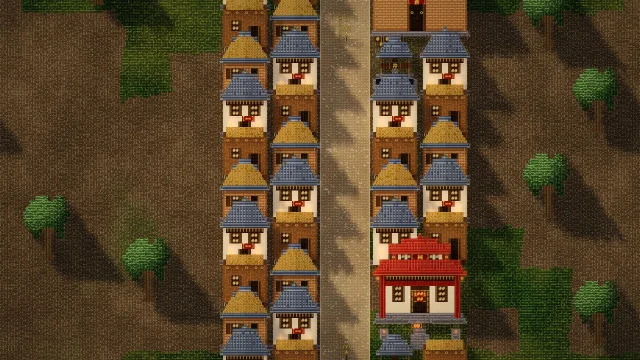
The same city in the dense 16×8 style. -
Milestone
0.6 Ancestors
- Three ancestors: Tian Gong guards the fields, He Mu the water, Yao Lao fire
- Each shrine is dedicated to one of them
- A forgotten ancestor sends a disaster of their element; one honoured with offerings keeps it away
- An Ancestors advisor and its own map layer
-
Milestone
0.7 The city grows upward
- Wheat, beans, cabbage, fish and game; tea, jade, salt, paper and stone
- Twelve buildings of faith, culture and order: temples and a pagoda, schools, a theatre, acrobats
- Festivals and the New Year; thieves and the watch
- Desirability of every tile, houses of steps 7 and 8, and the nobility
- A ruler’s house with a stipend and savings that carry over from mission to mission
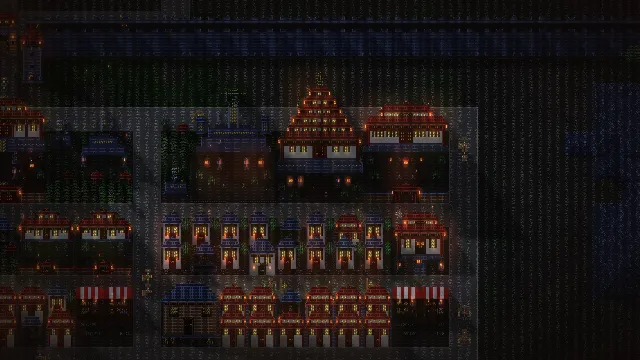
A pagoda among the houses of a later city. -
Milestone
0.8 The world beyond the walls
- An army: iron, weapons and horses; infantry, crossbowmen and chariots; walls, gates and towers
- Raids with a warning, or a peaceful game without them
- A world map (K) with the capital of the Son of Heaven and neighbouring cities; caravans by road and ships by river
- Court favor, its requests and gifts; tribute to neighbours
- Monuments built in stages: the Great Wall, the Grand Canal, a royal tomb and the Hall of Light
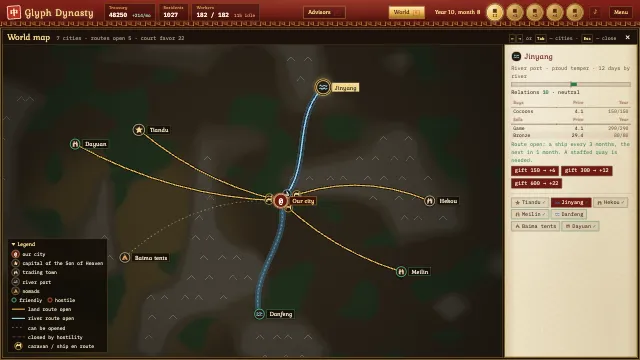
The world map with the capital and the neighbouring cities. -
First build
0.9 Every core system
- The first version with a number: all the systems of the first version in one build
- The game is ready for playtests
- The world map opens full screen and reads larger
- The English name of the game becomes Glyph Dynasty
-
Not released yet
The next version
Everything below already works in development builds but has not been released. This version has no number yet: it gets one when it ships.
-
Five languages and a friendlier game
- English, Russian, French, Spanish and Chinese; the language switches at once, without a restart
- Three difficulty levels: easy, normal and hard
- 32 short hints the first time you meet a building, an advisor or a disaster
- Music that follows the city: calm themes by day, alarm for fires and raids, a festive theme after victory
- Every menu screen fits the window; granaries and storehouses take orders for each good
-
Qin and Han in full
- Qin edicts, the Office of Measures, law officers, a mint and the paved chidao road
- The Mausoleum of the First Sovereign with its clay army
- The Western gate opens the Silk Road, the Taixue holds examinations, the Weiyang Palace crowns the capital
- The campaign grows to 17 missions across five dynasties
- Free play is won when Heaven speaks: “Mandate confirmed”
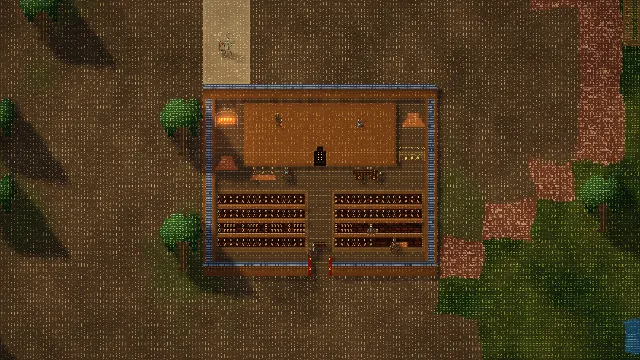
The clay army in the pits of the mausoleum. -
Large maps and a city you can read
- A large 160×160 map for free play
- Real Chinese characters on the signboards of 28 kinds of building: 市 on the market, 倉 on the granary
- Trading ships sail along the Grand Canal
- Free play opens the epochs one by one
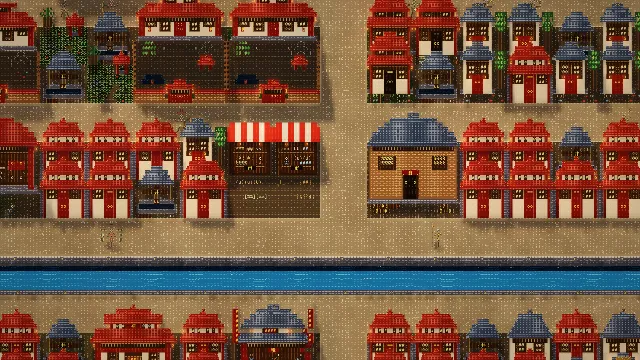
Signboards in characters, gold on lacquer. -
In development
League of Cities
- Co-op for 2 to 4 players, each with a city of their own
- Gifts, trade pacts and calls for help between neighbours
- A shared monument that no one can build alone
- Steam lobbies for friends
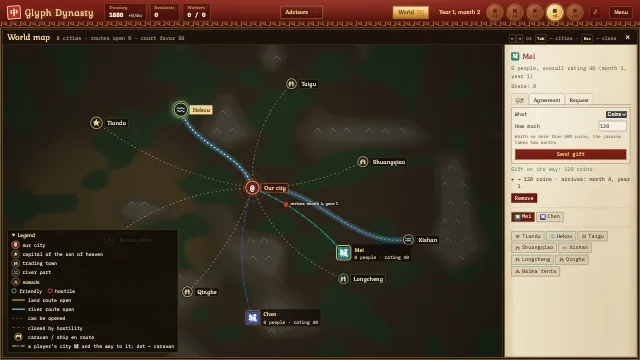
Cities of three players on the world map. -
A city made for the camera
- A capture mode without the interface and with a free camera
- “Show the characters”: hold one key and only the bare characters remain
- Any frame saved as a real .txt text file
- A wave of lanterns at dusk, rain and snow, a locust swarm, floods and fire on the roofs
- Spring Festival lanterns and fireworks of characters; a 30-second video of three thousand years
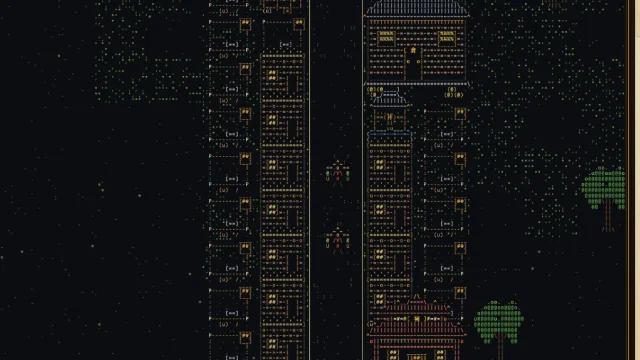
A street of the city as bare characters. -
The road to Steam
- Desktop builds for Windows and macOS
- A demo with the first Xia missions
- 21 achievements and saves in Steam Cloud
- The Steam page, and this site in five languages
-
Goal
1.0 Early Access
Early Access on Steam after the playtests. After that, regular updates shaped by what players write.